- Home
- About
- Membership
- Applied Economics
- Research, Agronomy & Innovation
- Phahama Grain Phakama
- Magazines
- NAMPO Park
- News & Events (archived)
- Contact
- Wheat
- Sorghum
- PGP Ukukhula Conference
- Grow for Gold Gallery
- Canola
- Nampo Alfa Gallery
- Maize
- NAMPO Cape Gallery
- Barley
- NAMPO Park Kers & Geskenkmark Gallery
- Soybeans
- NAMPO Park Accomodation
- Groundnuts
- Live Dashboards
- Sunflower
- Nampo
- Alternative
- NAMPO (Pty) Ltd
- Grain SA Group Personnel
- Document Library
- Document Search
- Crop Improvement Consortium
- Maize Cultivar Trials
- CPT
- Portfolio
- Conservation Agriculture
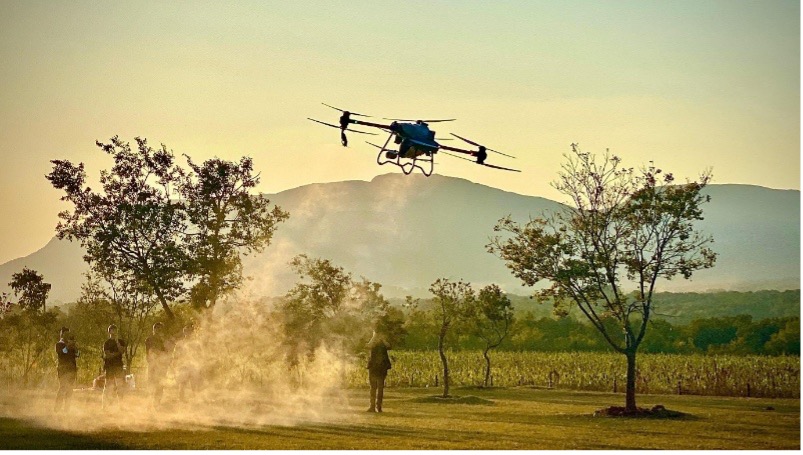
Climate Resilience Consortium
The focus is on building resilient and sustainable grain production systems that can withstand climate-related pressures linked to climate change, giving farmers the tools to stay productive, profitable and prepared for future.
- Home
- Research, Agronomy & Innovation
- Climate Resilience Consortium
South African grain producers are increasingly challenged by the extreme weather such as scorching heat, late rains, and prolonged droughts which disrupt planting schedules and threaten harvest. These climate shifts pose a direct risk to food production and long-term food security.
To address these challenges, the Climate Resilience Consortium (CRC) was established to support producers in adapting to increasingly unpredictable weather. CRC brings together maize breeders, agronomists, climate scientists, and data experts to co-develop science-based, locally relevant solutions. These include improved seed germination, climate-resilient hybrids, precision agriculture, and region-specific crop rotation strategies, all tested under real-world farming conditions.
Our Aim
To investigate the impact of climate change and variability on grain production, develop and test sustainable, practical response plans, and build capacity to support food and nutrition security in a changing climate.
Our focus areas
-
Build a knowledge-base on the effect of climate change on agriculture
-
Develop climate change response plans
Objectives
OBJECTIVE 1
Build a knowledge-based on the effect of climate change on agriculture.
Understanding how changing weather patterns affect crop performance is critical for building a strong knowledge base on the impacts of climate change on agriculture.
In South Africa’s key maize-growing regions, delayed summer rainfall has pushed planting dates later into the season. To investigate the effects of this shift, experts from the University of the Free State, University of Pretoria, and the Agricultural Research Council launched a multi-institutional project to assess maize growth, development, health, and yield under real-world conditions.
Through monthly and weekly planting trials between December and January across multiple sites, the project team identified mid-December as the critical planting cutoff for maintaining good yields. Plantings after this date, especially in January and February, showed steep declines in grain quality and yield, particularly in dry years. While cultivar selection played a role, the timing of planting proved far more influential on overall crop performance. In 2024, late planting resulted in near-total crop failure at some dryland sites despite limited irrigation, whereas December plantings consistently yielded up to 5.8 tons per hectare under favourable conditions.
Late-planted maize often produced more tillers but suffered poor pollination due to shortened silk development and increased stress during flowering, such as heat and water scarcity. This led to reduced grain set, ear size, and quality, compromising reproductive capacity and increasing vulnerability. Although drought-tolerant cultivars showed some resilience under late planting, they could not fully offset the risks. This research highlights the vital importance of planting timing aligned with cultivar performance and expected weather patterns to support sustainable maize production.
Overall, these findings contribute valuable insights to South Africa’s agricultural climate knowledge base. They emphasise planting time as a critical management decision and provide producers with practical, data-driven guidance to adapt to climate-related challenges. This applied research plays a key role in building long-term resilience within grain production systems.
OBJECTIVE 2
Develop climate change response plans.
South African grain producers are already feeling the pressure of a changing climate. Longer dry spells, unpredictable rainfall, and rising temperatures are increasingly threatening yields and farming livelihoods.
To help producers stay ahead of these challenges, several collaborative projects are underway to develop practical, science-based responses tailored to local conditions. These projects focus on breeding climate-resilient crops, improving soil health through sustainable practices, and applying precision technologies to optimise input use and decision-making.
A key strategy is breeding crops that can thrive under heat and drought stress. One of the projects in this objective has developed and evaluated over 480 maize hybrid combinations across multiple locations, identifying several high-performing candidates suited to marginal conditions. Three elite hybrids have already been selected for release, offering more reliable performance for producers in dryland areas. This breeding effort is supported by a strong pipeline that combines local adaptation with modern selection tools to ensure continuous development of stress-resilient varieties.
Equally critical is the long-term improvement of agronomic practices. Ongoing trials in the Free State and Eastern Cape are testing how conservation tillage, crop rotation, and cover cropping affect soil health, water retention, and yield stability over time. Early results show that rotating maize with legumes and incorporating cover crops can improve yields even during dry years, while also enhancing microbial activity and long-term fertility. These insights provide concrete guidance for building more resilient farming systems from the ground up.
In addition to improving seeds and systems, another set of projects is exploring how digital tools can make climate-smart farming more precise and profitable. Through the Data Intensive Farm Management project, field trials are testing variable nitrogen and seeding strategies. The findings show that even simple adjustments informed by data can reduce input costs and boost yield. This is especially relevant for resource-constrained producers who need targeted, efficient practices that make the most of every hectare.
Researchers are also investigating how alternative crops like pigeon peas and dry beans can offer new options for low-input, climate-resilient farming. With a focus on poor soil conditions and microbial interactions, these trials are uncovering low-cost ways to improve seed germination and plant performance without heavy chemical use. This provides a promising path for both smallholder and commercial producers seeking diversification.
Together, these diverse efforts form the backbone of a multi-pronged response to climate change in grain farming. By combining genetic innovation, agronomic resilience, and precision support, they aim to equip producers with practical tools to adapt, produce more reliably, and safeguard food systems under increasingly uncertain conditions.
Objectives
OBJECTIVE 1
Build a knowledge-based on the effect of climate change on agriculture.
Understanding how changing weather patterns affect crop performance is critical for building a strong knowledge base on the impacts of climate change on agriculture.
In South Africa’s key maize-growing regions, delayed summer rainfall has pushed planting dates later into the season. To investigate the effects of this shift, experts from the University of the Free State, University of Pretoria, and the Agricultural Research Council launched a multi-institutional project to assess maize growth, development, health, and yield under real-world conditions.
Through monthly and weekly planting trials between December and January across multiple sites, the project team identified mid-December as the critical planting cutoff for maintaining good yields. Plantings after this date, especially in January and February, showed steep declines in grain quality and yield, particularly in dry years. While cultivar selection played a role, the timing of planting proved far more influential on overall crop performance. In 2024, late planting resulted in near-total crop failure at some dryland sites despite limited irrigation, whereas December plantings consistently yielded up to 5.8 tons per hectare under favourable conditions.
Late-planted maize often produced more tillers but suffered poor pollination due to shortened silk development and increased stress during flowering, such as heat and water scarcity. This led to reduced grain set, ear size, and quality, compromising reproductive capacity and increasing vulnerability. Although drought-tolerant cultivars showed some resilience under late planting, they could not fully offset the risks. This research highlights the vital importance of planting timing aligned with cultivar performance and expected weather patterns to support sustainable maize production.
Overall, these findings contribute valuable insights to South Africa’s agricultural climate knowledge base. They emphasise planting time as a critical management decision and provide producers with practical, data-driven guidance to adapt to climate-related challenges. This applied research plays a key role in building long-term resilience within grain production systems.
OBJECTIVE 2
Develop climate change response plans.
South African grain producers are already feeling the pressure of a changing climate. Longer dry spells, unpredictable rainfall, and rising temperatures are increasingly threatening yields and farming livelihoods.
To help producers stay ahead of these challenges, several collaborative projects are underway to develop practical, science-based responses tailored to local conditions. These projects focus on breeding climate-resilient crops, improving soil health through sustainable practices, and applying precision technologies to optimise input use and decision-making.
A key strategy is breeding crops that can thrive under heat and drought stress. One of the projects in this objective has developed and evaluated over 480 maize hybrid combinations across multiple locations, identifying several high-performing candidates suited to marginal conditions. Three elite hybrids have already been selected for release, offering more reliable performance for producers in dryland areas. This breeding effort is supported by a strong pipeline that combines local adaptation with modern selection tools to ensure continuous development of stress-resilient varieties.
Equally critical is the long-term improvement of agronomic practices. Ongoing trials in the Free State and Eastern Cape are testing how conservation tillage, crop rotation, and cover cropping affect soil health, water retention, and yield stability over time. Early results show that rotating maize with legumes and incorporating cover crops can improve yields even during dry years, while also enhancing microbial activity and long-term fertility. These insights provide concrete guidance for building more resilient farming systems from the ground up.
In addition to improving seeds and systems, another set of projects is exploring how digital tools can make climate-smart farming more precise and profitable. Through the Data Intensive Farm Management project, field trials are testing variable nitrogen and seeding strategies. The findings show that even simple adjustments informed by data can reduce input costs and boost yield. This is especially relevant for resource-constrained producers who need targeted, efficient practices that make the most of every hectare.
Researchers are also investigating how alternative crops like pigeon peas and dry beans can offer new options for low-input, climate-resilient farming. With a focus on poor soil conditions and microbial interactions, these trials are uncovering low-cost ways to improve seed germination and plant performance without heavy chemical use. This provides a promising path for both smallholder and commercial producers seeking diversification.
Together, these diverse efforts form the backbone of a multi-pronged response to climate change in grain farming. By combining genetic innovation, agronomic resilience, and precision support, they aim to equip producers with practical tools to adapt, produce more reliably, and safeguard food systems under increasingly uncertain conditions.
Projects
CURRENT PROJECT
The effects of a changing environment and late-planting dates on maize plant development and yield in South Africa
Primary Institution: Agricultural Research Council, University of Pretoria, University of the Free State
Principal Investigators: Dr Nicky Creux (UP-FABI), Prof Gert Ceronio (UFS), Mr Deon Du Toit (ARC)
Collaborators: Prof Emma Archer (Department of Geography, Geoinformatics and Meteorology, UP), Dr Dirk Swanevelder (ARC Biotechnology Platform), Prof Wouter Maes (University of Ghent), Dr Robert Mangani (Department of Plant and Soil Sciences, UP)
CURRENT PROJECT
Expanding genetic variability for heat and drought stress and multi-locality hybrid evaluation
Primary Institution: Syngenta
Principal Investigators: Mr Roean Wessels and Dr Francois Koekemoer
Collaborators: University of Stellenbosch
CURRENT PROJECT
Long-term crop rotation and tillage
Primary Institution: University of the Free State
Principal Investigators: Dr Gert Ceronio
Collaborators: North West University (Prof Gerhard du Preez), North West University (Prof Driekie Fourie), University of the Free State (Dr Candice Jansen)
CURRENT PROJECT
From seed to harvest: A temporal odyssey of ecosystem dynamics in grain systems
Primary Institution: North West University
Principal Investigators: Prof Gerhard du Preez
Collaborators: University of the Free State (Prof Gert Ceronio), Western
Cape Department of Agriculture (Dr Johan Strauss), Michigan
State University (Prof Christine Sprunger)
CURRENT PROJECT
Development of region-specific crop rotation programmes for the Eastern Free State
Primary Institution: University of Pretoria
Principal Investigators: Prof Martin Steyn
Collaborators: University of Pretoria (Prof Quenton Kritzinger), Agricultural Research Council (Dr Elsie Cruyqagen, Dr Mariëtte Truter) and Potatoes South Africa
CURRENT PROJECT
Yield potential and adaptation of grain crops in the Eastern Cape
Primary Institution: Stellenbosch University
Principal Investigators: Prof Pieter Swanepoel
Collaborators: Fort Hare University; University of the Free State; Agricultural Research Council
CURRENT PROJECT
Data Intensive Farm Management (Using precision agriculture techniques to improve agronomic management)
Primary Institution: Stellenbosch University
Principal Investigators: Prof Pieter Swanepoel
Collaborators: BFAP, Grain SA, University of Illinois, Agricultural Research Council, Protein Research Foundation
CURRENT PROJECT
Improving seed germination and evaluating the growth and yield potential of alternative crops (pigeon pea and dry beans)
Primary Institution: University of the Western Cape and Agricultural Research Council
Principal Investigators: Prof Ashwil Klein (UWC), Prof Marshall Keyster (UWC) & Deon du Toit (ARC)
Collaborators: None