Plant Health Consortium

The Consortium develops practical, experience-driven strategies that help producers respond quickly and sustainably to current and emerging challenges. Its work not only safeguards yields and improves productivity but also strengthens long-term sustainability across South Africa’s grain sector.

  1. Home
  2. Research, Agronomy & Innovation
  3. Plant Health Consortium

The growing impact of climate variability, including drought, flooding, and extreme temperature fluctuations, is posing significant risks to South Africa’s grain and oilseed farming. These challenges create ideal conditions for disease outbreaks, pest invasions, and weed infestations, threatening crop yields and farm income.

The Plant Health Consortium protects South Africa’s grain and oilseed crops by coordinating research and practical action against climate-related biological threats such as pests, diseases, and weeds. By bringing together researchers, government, industry, and farmers, the Consortium delivers practical, reliable tools for pest monitoring, biosecurity, and on-farm decision-making. This collaborative approach helps producers protect yields, reduce input costs, support producers, and unlock new export opportunities.

To achieve this

The Consortium focuses on three core objectives: accurate diagnostics, research prioritisation, and effective management. Reliable pest and disease diagnostics help farmers take the right action in the field and avoid costly mistakes. The Consortium also shares research outcomes and practical recommendations with producers to support timely, informed decisions.

Our focus areas

Understanding the distribution and impact of pests and diseases allows researchers to identify priority threats and informs negotiations for new markets with countries like China, Egypt, and Indonesia.

With this knowledge in place, the Consortium develops practical, experience-driven strategies that help producers respond quickly and sustainably to current and emerging challenges. Its work not only safeguards yields and improves productivity but also strengthens long-term sustainability across South Africa’s grain sector.

  • Deliver impactful, industry-driven research to boost grain sector productivity, resilience, and sustainability
  • Provide accurate pest and disease diagnostics to support farmer decisions and trade readiness
  • Prioritise key threats and develop effective, integrated management strategies

Objectives

OBJECTIVE 1

Deliver impactful, industry-driven research to boost grain sector productivity, resilience, and sustainability.

The National Grain Research Programme (NGRP) is a strategic initiative established in 2021 to strengthen grain research in South Africa by driving collaborative, solution-focused research that addresses the real needs of grain producers.

It brings together government, industry, and research institutions to ensure research is practical, innovative, and capable of improving productivity, resilience, and sustainability across the sector.

The programme supports research in key areas such as plant health, crop improvement, climate resilience, and integrated farming systems. Since its inception, the NGRP has expanded its network to include institutions like the Agricultural Research Council (ARC) and the Technology Innovation Agency (TIA), broadening its reach and expertise. It also plays a vital role in developing human capital by supporting student participation and strengthening links between academia and industry.

To promote knowledge exchange and alignment, the NGRP has hosted four (4) annual research days, providing a platform for farmers, researchers, and stakeholders to share insights and set priorities. Discussions have covered topics such as regenerative agriculture, herbicide resistance, clinical diagnostics, and the use of AI in farming, with a focus on improving farm performance, reducing input costs, and building long-term resilience.

By connecting cutting-edge research with on-farm realities and promoting collaboration across the value chain, the NGRP is helping shape a more sustainable, innovative, and responsive grain industry in South Africa.

OBJECTIVE 2

Provide accurate pest and disease diagnostics to support farmer decisions and trade readiness.

Effective management of pests and diseases is critical to safeguarding South Africa’s grain production and ensuring access to local and international markets.

Timely and accurate diagnostics empower farmers to make informed decisions, optimise crop protection, and reduce unnecessary pesticide use, ultimately enhancing productivity and resilience. This objective focuses on strengthening diagnostic services and pest surveillance across key grain-producing regions, addressing gaps in access to reliable information, and supporting integrated pest and disease management strategies.

To achieve this, the consortium supports several targeted projects. The FABI Diagnostic Disease Clinic at the University of Pretoria fills a crucial gap by providing expert identification of pests and pathogens for grain and oilseed producers ranging from emerging to commercial farmers. Its accurate diagnostics underpin biosecurity efforts and facilitate trade through essential Pest-Free Area and Pest Risk Analysis reports.

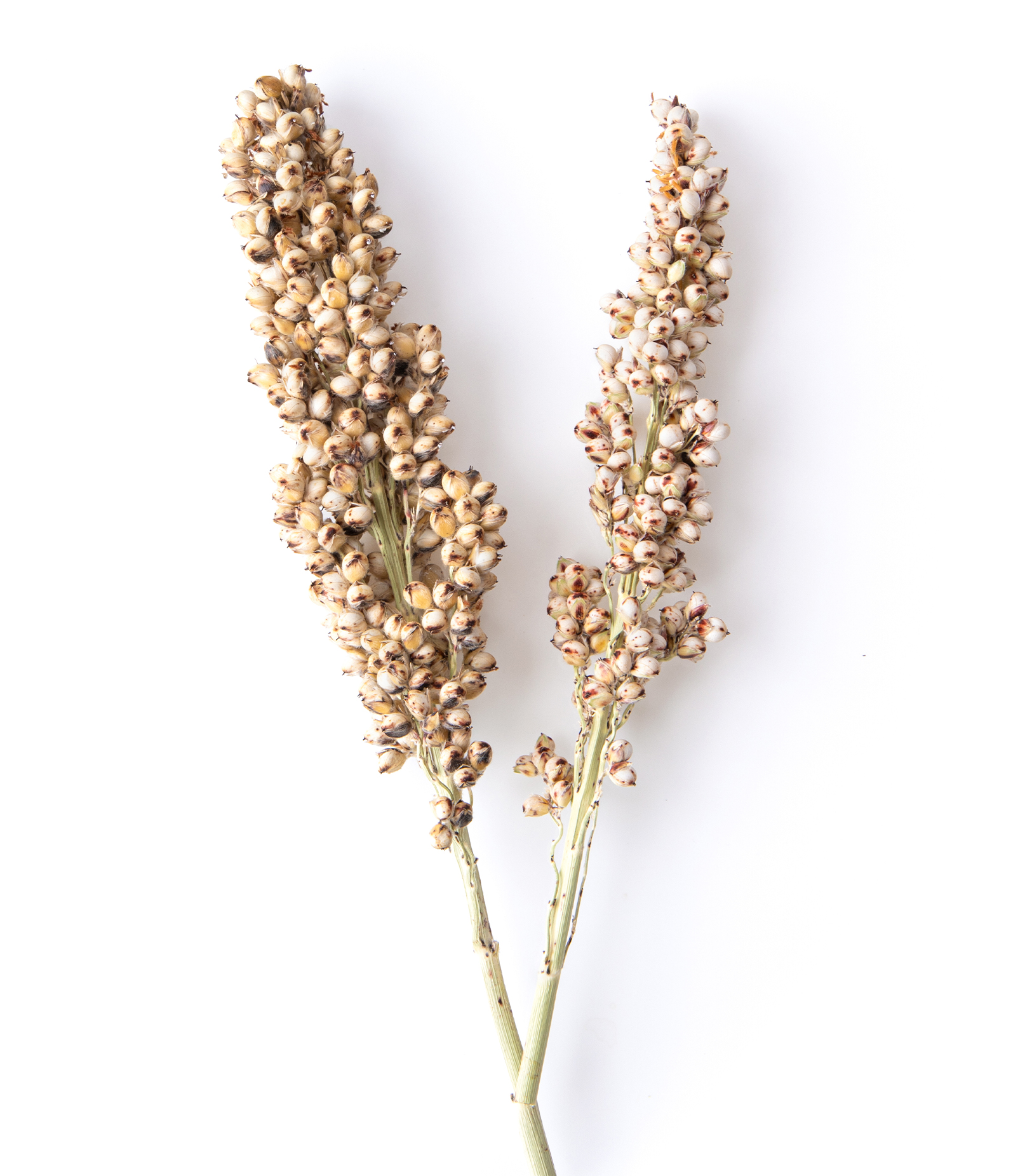
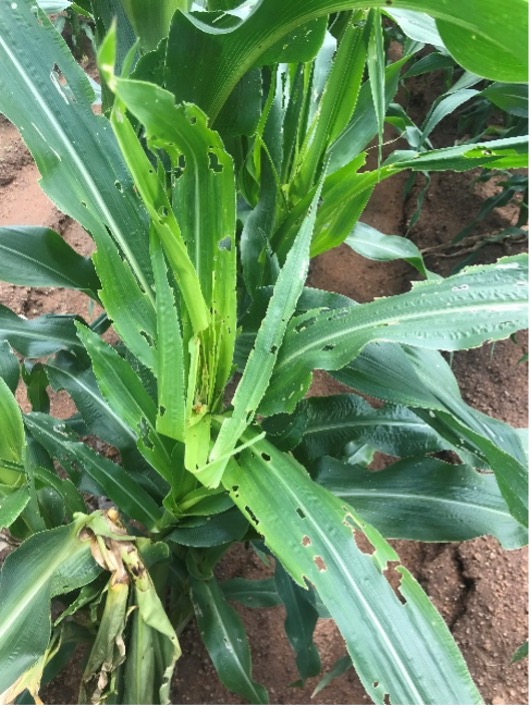
Building on this, research into the seasonal activity and distribution of the invasive fall armyworm in maize-growing areas of Gauteng and North West provinces aims to improve early detection and monitoring. By testing effective trap technologies, the project supports more sustainable and tailored control strategies that help reduce crop losses and input costs. Similarly, in Limpopo, mapping the distribution and abundance of stem borers on maize and sorghum provides vital baseline data that guide early warning systems and targeted pest management, protecting vulnerable small-scale farmers and strengthening food security.

Complementing these pest-focused efforts, disease surveillance projects such as mapping maize ear rots and developing predictive models contribute to integrated pest and disease management. By identifying environmental triggers and refining intervention timing, these initiatives help farmers apply precise control measures. Together, these projects are not only improving how pest and disease threats are detected and managed today but also laying the foundation for a more resilient and innovative grain industry tomorrow.

OBJECTIVE 3

Prioritise key threats and develop effective, integrated management strategies.

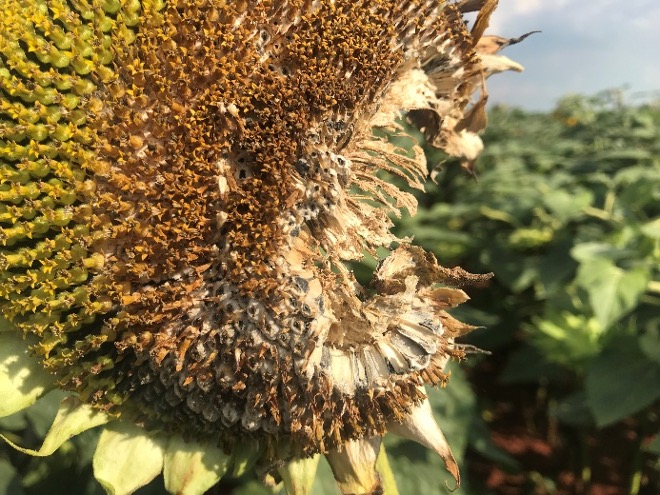
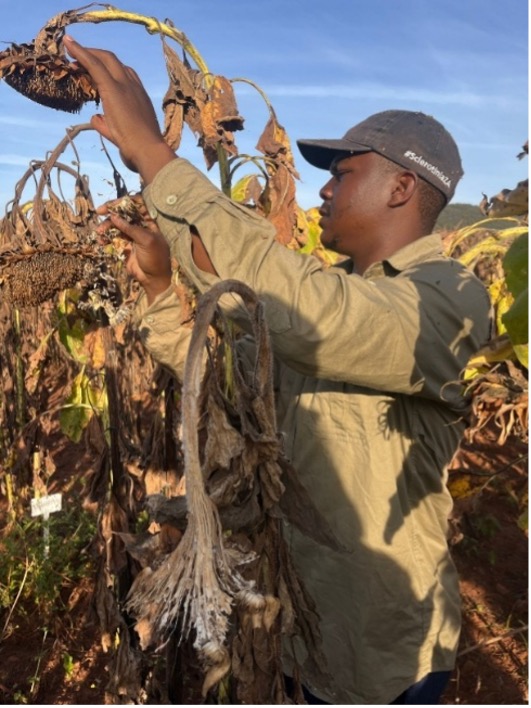
Each growing season brings new challenges for farmers, with threats like Sclerotinia quietly affecting sunflower and soybean crops. These diseases do not just reduce yields but also impact the stability of farming livelihoods across South Africa.

This objective focuses on identifying these key threats and developing practical, integrated strategies to manage them effectively. Through collaboration between researchers, industry experts, and producers, the South African Sclerotinia Research Network has become a vital platform for tackling these issues head-on.

The projects under this objective explore innovative solutions, from monitoring disease spread and manipulating flowering times to testing environmentally friendly treatments. Together, these efforts aim to equip farmers with reliable tools to protect their crops and secure their futures.

While the work on Sclerotinia has marked a bold step in tackling one of the most destructive pathogens in sunflower and soybean systems, it forms just one part of a much larger effort. Across South Africa’s summer grain regions, black commercial farmers are up against a complex network of soilborne threats. Some are invisible to the eye, others crawl just below the surface, but all quietly erode yields, profitability, and long-term sustainability.

To meet these challenges head-on, several new projects are digging deeper into the soil to uncover answers. From root-rotting fungi and parasitic nematodes to the elusive yet devastating cutworm, each initiative under Objective 4 explores a different facet of the plant health puzzle. These projects are designed not only to generate insight, but to deliver real, usable solutions for farmers. The work is practical, grounded in science, and shaped by the conditions that producers face every season.

Even as farmers contend with pests below the soil and diseases that weaken their crops, another threat continues to spread across their lands. Aggressive and increasingly resilient weeds are becoming one of the most urgent challenges in crop production.

Weeds compete directly with crops for water, nutrients, sunlight and space. They reduce yields, interfere with harvesting and raise production costs. As herbicide resistance becomes more widespread, the options available to control weeds are shrinking. Conservation agriculture, while essential for long-term soil health, often reduces the use of mechanical weed control. This places greater reliance on chemical interventions, which are becoming less effective and more expensive. Farmers are left with fewer tools and higher risks, forcing them to adapt quickly to changing conditions.

To respond to this evolving threat, new research efforts are under way. These projects are focused on understanding how weed invasions take hold, how resistance develops and what practical steps can be taken to regain control. In the following section, two projects take centre stage. One is uncovering the genetic origins and herbicide resistance patterns of Palmer amaranth, an invasive species with a strong foothold in key production regions. The other is testing harvest weed seed control as a promising new method to prevent weed seed return in conservation farming systems.

These initiatives are part of a growing response to support farmers with timely information, targeted interventions and long-term strategies to manage weeds more effectively.

Objectives

OBJECTIVE 1

Deliver impactful, industry-driven research to boost grain sector productivity, resilience, and sustainability.

The National Grain Research Programme (NGRP) is a strategic initiative established in 2021 to strengthen grain research in South Africa by driving collaborative, solution-focused research that addresses the real needs of grain producers.

It brings together government, industry, and research institutions to ensure research is practical, innovative, and capable of improving productivity, resilience, and sustainability across the sector.

The programme supports research in key areas such as plant health, crop improvement, climate resilience, and integrated farming systems. Since its inception, the NGRP has expanded its network to include institutions like the Agricultural Research Council (ARC) and the Technology Innovation Agency (TIA), broadening its reach and expertise. It also plays a vital role in developing human capital by supporting student participation and strengthening links between academia and industry.

To promote knowledge exchange and alignment, the NGRP has hosted four (4) annual research days, providing a platform for farmers, researchers, and stakeholders to share insights and set priorities. Discussions have covered topics such as regenerative agriculture, herbicide resistance, clinical diagnostics, and the use of AI in farming, with a focus on improving farm performance, reducing input costs, and building long-term resilience.

By connecting cutting-edge research with on-farm realities and promoting collaboration across the value chain, the NGRP is helping shape a more sustainable, innovative, and responsive grain industry in South Africa.

OBJECTIVE 2

Provide accurate pest and disease diagnostics to support farmer decisions and trade readiness.

Effective management of pests and diseases is critical to safeguarding South Africa’s grain production and ensuring access to local and international markets.

Timely and accurate diagnostics empower farmers to make informed decisions, optimise crop protection, and reduce unnecessary pesticide use, ultimately enhancing productivity and resilience. This objective focuses on strengthening diagnostic services and pest surveillance across key grain-producing regions, addressing gaps in access to reliable information, and supporting integrated pest and disease management strategies.

To achieve this, the consortium supports several targeted projects. The FABI Diagnostic Disease Clinic at the University of Pretoria fills a crucial gap by providing expert identification of pests and pathogens for grain and oilseed producers ranging from emerging to commercial farmers. Its accurate diagnostics underpin biosecurity efforts and facilitate trade through essential Pest-Free Area and Pest Risk Analysis reports.

Building on this, research into the seasonal activity and distribution of the invasive fall armyworm in maize-growing areas of Gauteng and North West provinces aims to improve early detection and monitoring. By testing effective trap technologies, the project supports more sustainable and tailored control strategies that help reduce crop losses and input costs. Similarly, in Limpopo, mapping the distribution and abundance of stem borers on maize and sorghum provides vital baseline data that guide early warning systems and targeted pest management, protecting vulnerable small-scale farmers and strengthening food security.

Complementing these pest-focused efforts, disease surveillance projects such as mapping maize ear rots and developing predictive models contribute to integrated pest and disease management. By identifying environmental triggers and refining intervention timing, these initiatives help farmers apply precise control measures. Together, these projects are not only improving how pest and disease threats are detected and managed today but also laying the foundation for a more resilient and innovative grain industry tomorrow.

OBJECTIVE 3

Prioritise key threats and develop effective, integrated management strategies.

Each growing season brings new challenges for farmers, with threats like Sclerotinia quietly affecting sunflower and soybean crops. These diseases do not just reduce yields but also impact the stability of farming livelihoods across South Africa.

This objective focuses on identifying these key threats and developing practical, integrated strategies to manage them effectively. Through collaboration between researchers, industry experts, and producers, the South African Sclerotinia Research Network has become a vital platform for tackling these issues head-on.

The projects under this objective explore innovative solutions, from monitoring disease spread and manipulating flowering times to testing environmentally friendly treatments. Together, these efforts aim to equip farmers with reliable tools to protect their crops and secure their futures.

While the work on Sclerotinia has marked a bold step in tackling one of the most destructive pathogens in sunflower and soybean systems, it forms just one part of a much larger effort. Across South Africa’s summer grain regions, black commercial farmers are up against a complex network of soilborne threats. Some are invisible to the eye, others crawl just below the surface, but all quietly erode yields, profitability, and long-term sustainability.

To meet these challenges head-on, several new projects are digging deeper into the soil to uncover answers. From root-rotting fungi and parasitic nematodes to the elusive yet devastating cutworm, each initiative under Objective 4 explores a different facet of the plant health puzzle. These projects are designed not only to generate insight, but to deliver real, usable solutions for farmers. The work is practical, grounded in science, and shaped by the conditions that producers face every season.

Even as farmers contend with pests below the soil and diseases that weaken their crops, another threat continues to spread across their lands. Aggressive and increasingly resilient weeds are becoming one of the most urgent challenges in crop production.

Weeds compete directly with crops for water, nutrients, sunlight and space. They reduce yields, interfere with harvesting and raise production costs. As herbicide resistance becomes more widespread, the options available to control weeds are shrinking. Conservation agriculture, while essential for long-term soil health, often reduces the use of mechanical weed control. This places greater reliance on chemical interventions, which are becoming less effective and more expensive. Farmers are left with fewer tools and higher risks, forcing them to adapt quickly to changing conditions.

To respond to this evolving threat, new research efforts are under way. These projects are focused on understanding how weed invasions take hold, how resistance develops and what practical steps can be taken to regain control. In the following section, two projects take centre stage. One is uncovering the genetic origins and herbicide resistance patterns of Palmer amaranth, an invasive species with a strong foothold in key production regions. The other is testing harvest weed seed control as a promising new method to prevent weed seed return in conservation farming systems.

These initiatives are part of a growing response to support farmers with timely information, targeted interventions and long-term strategies to manage weeds more effectively.

Projects

CURRENT PROJECT

Pest & pathogen diagnostics

Project title: Pest & pathogen diagnostics
Primary Institution: University of Pretoria
Principal Investigators: Prof Cobus Visagie
Clinic administrator: Dr Lieschen De Vos
Extension officers: Lawrence Mataha and Matthew Jackson
Collaborators: Ukhanyo Farmer Development, Grain SA
CURRENT PROJECT

Seasonal activity and distribution patterns of fall armyworm (Lepidoptera: Noctuidae) moths in maize growing areas around two provinces in South Africa

Primary Institution: Tshwane University of Technology
Principal Investigators: Dr Shandukani Netshifhefhe (TUT)
Collaborators: National Research Foundation, Insect Science and Crop Watch
CURRENT PROJECT

Distribution patterns and relative abundance of stem borers on maize and sorghum in the Limpopo province

Project title: Distribution patterns and relative abundance of stem borers on maize and sorghum in the Limpopo province
Primary Institution: Dr Shandukani Netshifhefhe (TUT) and Prof Maboko Mphosi (UL)
Principal Investigators: Tshwane University of Technology and University of Limpopo
Collaborators: University Of Limpopo
CURRENT PROJECT

Mapping maize ear rots and their toxins in South Africa and the development of disease prediction model

Primary Institution: Stellenbosch University
Principal Investigators: Dr Lindy Rose
Collaborators: ARC, Intelligro, Bayer, Corteva Agriscience
CURRENT PROJECT

South African Sclerotinia Research Network

Primary Institution: Jointly led by the University of the Free State, Grain SA
Principal Investigators: Dr Lisa Rothmann
Collaborators: AgriSeed & DMS Genetics, Dr Adré Minnaar-Ontong, Western Cape Department of Agriculture
CURRENT PROJECT

Plant disease surveillance: value adding to the National soybean and sunflower cultivar trials

Primary Institution: University of the Free State
Principal Investigators: Dr Lisa Rothmann
Collaborators: Agricultural Research Council – Grain Crops
CURRENT PROJECT

Fungicide evaluation trials on Sclerotinia head and stem rot in sunflower

Primary Institution: University of the Free State
Principal Investigators: Dr Lisa Rothmann
Collaborators: University of the Free State, Agricultural Research Council – Grain Crops, Agronomy Info Services
CURRENT PROJECT

Manipulating flower timing with plant growth regulators as a possible sunflower escape strategy from Sclerotinia head rot

Primary Institution: University of Pretoria
Principal Investigators: Dr. Nicky Creux
Collaborators: ARC – BTP
CURRENT PROJECT

Surveys of soilborne diseases in summer grain production systems with special emphasis on the development of management strategies including crop rotation/cover crops and seed treatment for black commercial farmers

Primary Institution: Agricultural Research Council – Grain Crops
Principal Investigators: Dr Nancy Ntidi
Collaborators: Dr Sandra Lamprecht (ARC), Dr A.O. Mbatyoti (ARC)
CURRENT PROJECT

Management of cutworms

Primary Institution: Northwest University
Principal Investigators: Prof Johnnie van den Berg & Hannalene du Plessis
Collaborators: None
CURRENT PROJECT

Tracing the origin, spread and herbicide resistance profiles of Palmer amaranthus in South Africa

Primary Institution: University of Pretoria
Principal Investigators: Prof Juan Vorster
Collaborators: SAHRI, Bayer, Maize trust, OPOT
CURRENT PROJECT

Investigating the feasibility and efficacy of harvest weed seed control in different cropping systems in the Western Cape

Primary Institution: Stellenbosch University
Principal Investigators: Charne Viljoen
Collaborators: None

Stakeholders

Scroll to Top