OBJECTIVE 2
Develop climate change response plans.
South African grain producers are already feeling the pressure of a changing climate. Longer dry spells, unpredictable rainfall, and rising temperatures are increasingly threatening yields and farming livelihoods.
To help producers stay ahead of these challenges, several collaborative projects are underway to develop practical, science-based responses tailored to local conditions. These projects focus on breeding climate-resilient crops, improving soil health through sustainable practices, and applying precision technologies to optimise input use and decision-making.
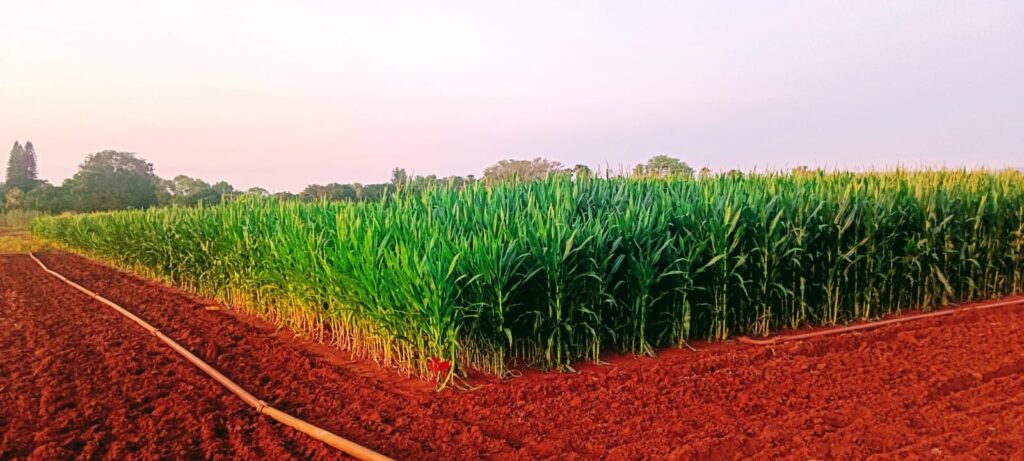
A key strategy is breeding crops that can thrive under heat and drought stress. One of the projects in this objective has developed and evaluated over 480 maize hybrid combinations across multiple locations, identifying several high-performing candidates suited to marginal conditions. Three elite hybrids have already been selected for release, offering more reliable performance for producers in dryland areas. This breeding effort is supported by a strong pipeline that combines local adaptation with modern selection tools to ensure continuous development of stress-resilient varieties.
Equally critical is the long-term improvement of agronomic practices. Ongoing trials in the Free State and Eastern Cape are testing how conservation tillage, crop rotation, and cover cropping affect soil health, water retention, and yield stability over time. Early results show that rotating maize with legumes and incorporating cover crops can improve yields even during dry years, while also enhancing microbial activity and long-term fertility. These insights provide concrete guidance for building more resilient farming systems from the ground up.
In addition to improving seeds and systems, another set of projects is exploring how digital tools can make climate-smart farming more precise and profitable. Through the Data Intensive Farm Management project, field trials are testing variable nitrogen and seeding strategies. The findings show that even simple adjustments informed by data can reduce input costs and boost yield. This is especially relevant for resource-constrained producers who need targeted, efficient practices that make the most of every hectare.
Researchers are also investigating how alternative crops like pigeon peas and dry beans can offer new options for low-input, climate-resilient farming. With a focus on poor soil conditions and microbial interactions, these trials are uncovering low-cost ways to improve seed germination and plant performance without heavy chemical use. This provides a promising path for both smallholder and commercial producers seeking diversification.
Together, these diverse efforts form the backbone of a multi-pronged response to climate change in grain farming. By combining genetic innovation, agronomic resilience, and precision support, they aim to equip producers with practical tools to adapt, produce more reliably, and safeguard food systems under increasingly uncertain conditions.